The Trickster and the Pandemic


It’s not funny

We have it totally under control. It’s one person coming in from China, and we have it under control. It’s going to be just fine. Donald Trump, President of the United States. January 22, 2020.

Everyone is going to die. There is no point in escaping from that, in escaping from reality. We have to stop being a country of sissies. Jair Bolsonaro, President of Brazil. November 20, 2020.

The Trickster and the Pandemic

The Trickster had an idea. What if he spread a deadly disease no one could see?

What if leaders said: “We have it totally under control. It’s one person coming in from China. It’s going to be just fine.” (Donald Trump. January 22, 2020)? And, “No one will die of coronavirus in our country. I publicly declare this.” (President Lukashenko of Belarus) Or, “The virus is out there and we will have to face it, but like men, damn it, not like kids.” (Jair Bolsonaro, president of Brazil)
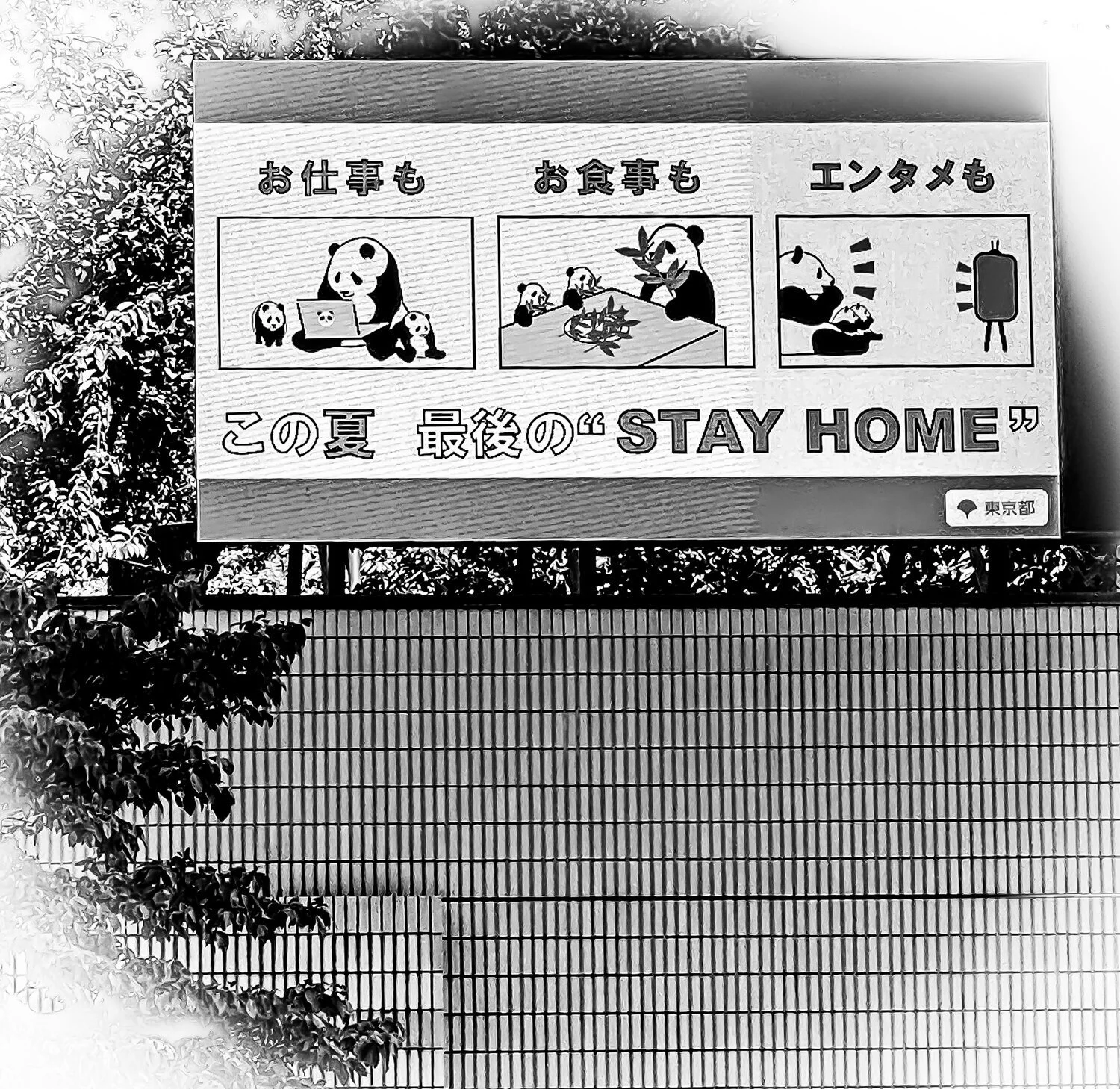
mbfitzmahan. Tokyo, Japan. 2021. (Billboard in downtown Tokyo from the city government warning “Stay home from work, from restaurants, and keep your distance until the end of the summer.”)

What if scientists found a cure, but half the people refused to get it? “One in five Americans believes the US government is using the COVID-19 vaccine to microchip the population.”

As of September 28, 2021 there have been 691,000 U.S. deaths since February 2020. The COVID 19 Pandemic is America’s deadliest. The 1918 flu killed 675,000 people. And the Trickster is not finished, yet. 45% of Americans have not been vaccinated.

The Trickster thinks this is fun.

I don’t.

Photo and words: Maureen Fitzmahan
Maureen is a founding member of the Art Junket (2014-2022)
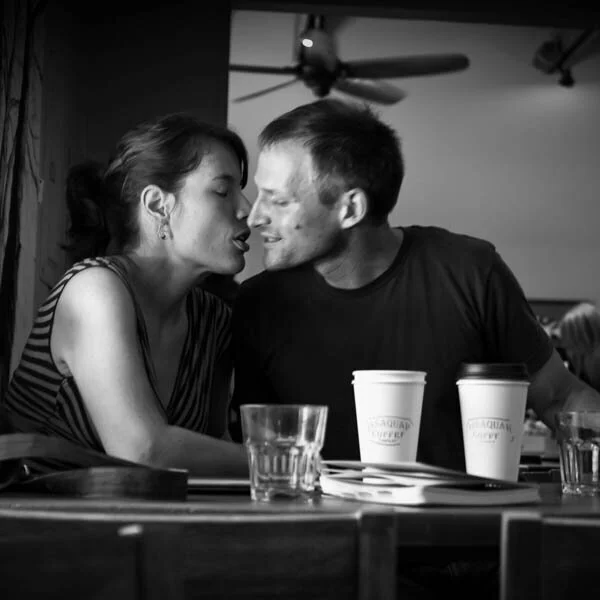
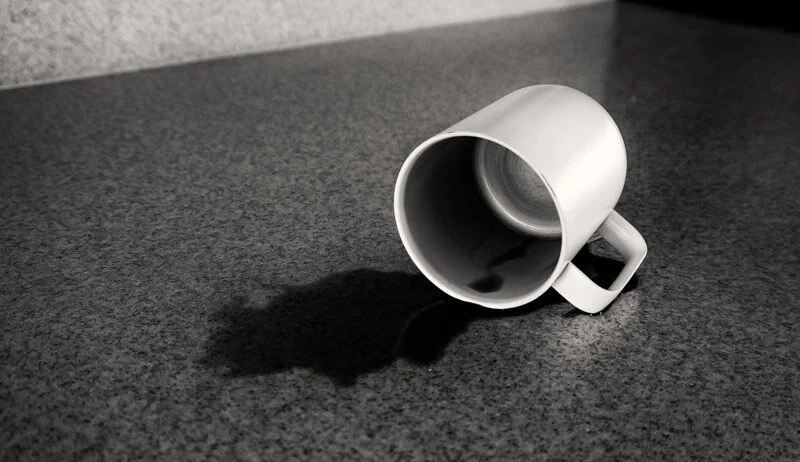
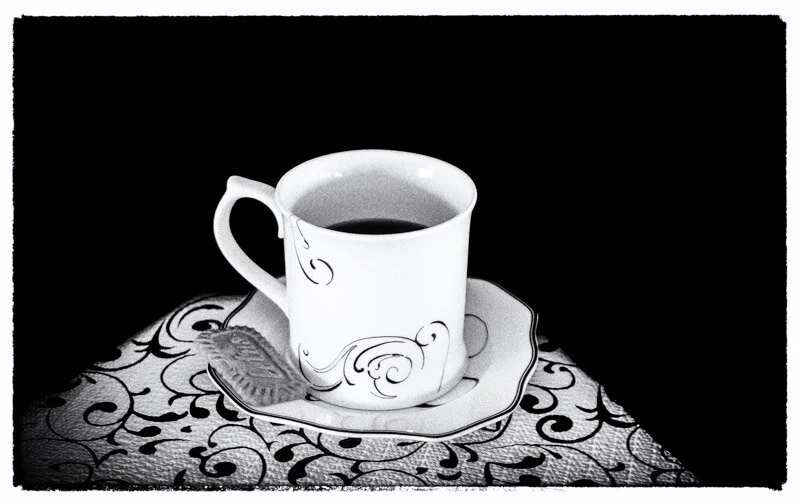
Coffee: 2021


Coffee in Music

Black coffee/Is my name/Black coffee/Ooh, is my thing. Black coffee/Freshly ground and fully prepared/Hot black coffee, boy/Mmh that's where it's at. Tina Turner

I never knew just what it was about this old coffee shop I love so much
All of the while I never knew
I never knew just what it was about this old coffee shop I love so much
All of the while I never knew

Landon Pigg, “Falling in Love in a Coffee Shop,” 2009

Kay Adamson. 2021.

It makes me think of mornings. Coffee. With scones and fresh raspberries. Barcelona in the Square seated at a table covered in red and white. Standing in line at Starbucks in New York. “Espresso, please. No! It’s my birthday. I’ll have a Mocha Cookie Crumble Frappuccino!” Waking up to my love with a cup of coffee in hand. “Sleepless in Seattle” with Meg Ryan and Tom Hanks. I don’t remember if there is coffee in this movie, but it is filmed in Seattle and I imagine a lot of coffee was consumed by the film makers.

What is it about coffee?

Musicians love coffee. The memories, the color, the passion. Oh, yes, and the love! I researched many songs inspired by coffee. I spent a whole afternoon listening to songs in Spanish where the troubadour praised his love with coffee colored eyes Was the drink called café because it was coffee colored? Or is the color brown called café because it is the color of coffee?

And then there is the smell of coffee.

I get lost in the aroma of coffee.
Cafe your eyes, cafe your skin,
Cafe the wish that was not.
Cafe of your hair, your walk,
Cafe your body that is no longer.
In the same cafe,
In the same city,
I want another coffee to forget.
* (Luciano Pereyra, “Aroma de Café”)

Me perco no aroma de um café.
Cafe seus olhos, cafe da sua pele,
Cafe o desejo que não foi.
Cafe do seu cabelo, o seu caminhar,
Cafe teu corpo que já não esta.
No mesmo café,
Na mesma cidade,
Eu quero outro café para esquecer.

Black coffee is used to protest injustice. Written by a Black woman, and later sung by a bunch of White guys from England, “Black Coffee” originally was written to say,

Black Coffee is my name…
Way back on yonder, I don't know when
I was brought over before I was ten
You see my skin is brown but my mind is black…
Here in America, the land of the free
You can get what you want if you got some DoReMi
I started out as a slave
I got free, I got paid
Now I'm independent and nobody's maid
I got me a place, I got me a raise.
(Tina Turner, “Black Coffee.” Listen to the original here.

Kay Adamson. 2020

And coffee can be philosophical, judgy, even metaphysical.

The trouble with the world today it seems to me
Is coffee in a cardboard cup
The trouble with the affluent society
Is coffee in a cardboard cup

No one's ever casual and nonchalant
No one wastes a minute in a restaurant
No one wants a waitress passing pleasantries
Like "Hiya miss"
"Hiya sir"
"May I take your order please"

The trouble with the world today is plain to see
Is everything is hurry up
It's "rush it through"
"Don't be slow"
"BLT on rye to go"
And coffee
I think she said 'coffee'
I know she said 'coffee
In a cardboard cup'

The trouble with the helter skelter life we lead
Is coffee in a cardboard cup
The trouble the psychologists have all agreed
Is coffee in a cardboard cup
(Mandi Patinkin, “Coffee in a Cardboard Cup”)

I spent days listening to songs with the word coffee. A Google search took me through 342 pages of coffee songs. Joy, depression, love and loneliness. I think every composer, alive and dead, was challenged to write a song with at least one reference to coffee.

Even Johann Sebastian Bach wrote a cantata about coffee. According to Wikipedia, Bach regularly directed a musical ensemble based at Zimmermann's coffee house. Bach wrote, "If I couldn't, three times a day, be allowed to drink my little cup of coffee, in my anguish I will turn into a shriveled-up roasted goat". (Wiki)

I could write about this all day. No end in sight.

Instead I will leave you with a playlist. Coffee, coffee, and more café!

Photos: Kay Adamson and Maureen Fitzmahan
Words by Maureen Fitzmahan

Becoming: 2021


My photographs are intimate.

The New Year
feelings of loneliness
the end of autumn.

Matsuo Basho

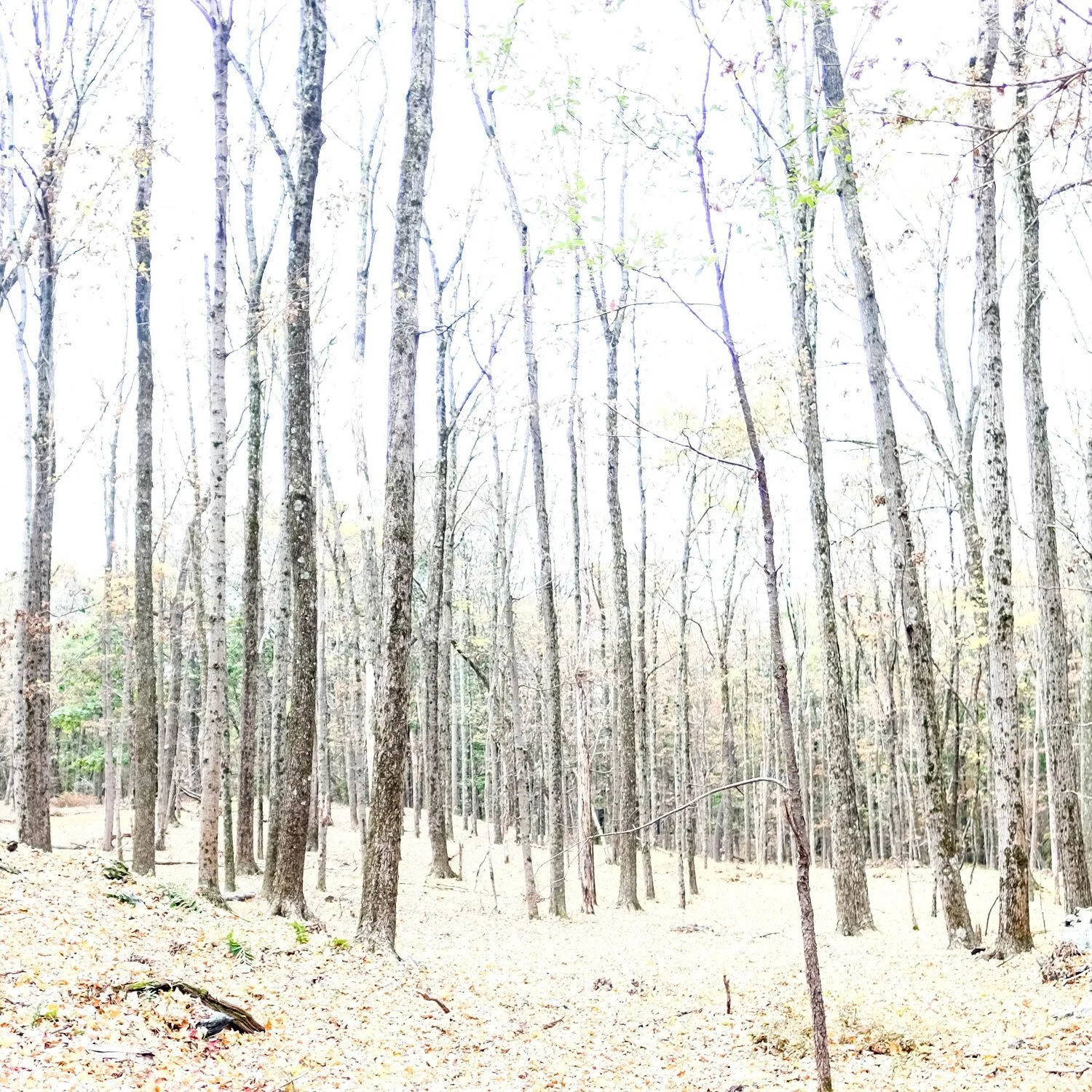
mbfitzmahan. Autumn in the Hudson Valley. 2020.

枯れ枝に烏の止まりけり秋の暮 芭蕉

Autumn evening
A crow perched
On a withered branch
Matsuo Basho

mbfitzmahan. Pawling, New York. 2020

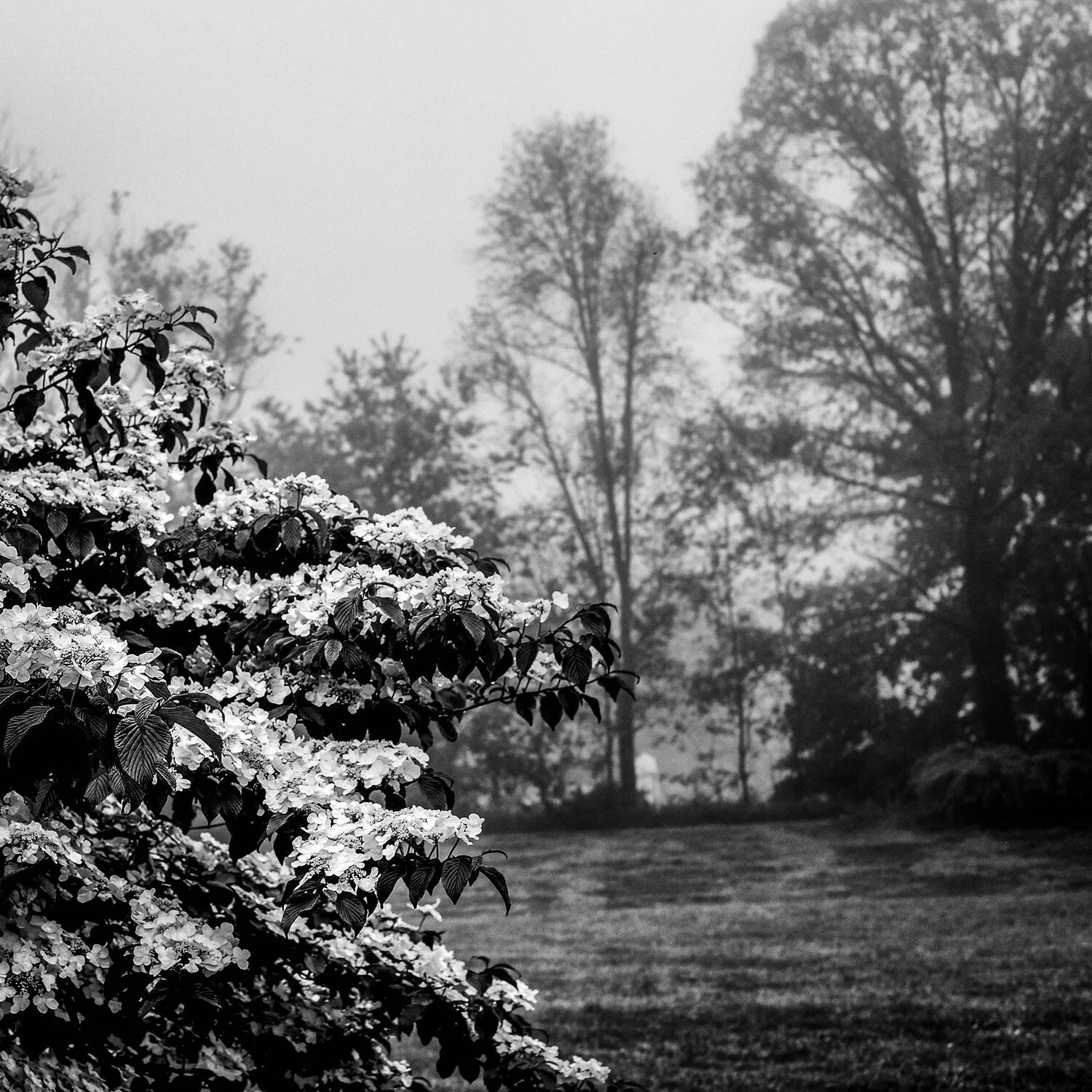
My photographs are intimate. They are portraits of surprise, pain, joy - moments of life. I generally take photos of people, but even my landscape photos are portraits of a delicate life.

Matsuo Basho, a 17th century haiku poet, instructed his students on how to write haiku,

In composing haiku there are two ways: “becoming” and “making.”

mbfitzmahan. Homeschool. New York. 2020

Basho made a distinction between these two ways of creating art, and supported “becoming” and viewed “making” as inferior, inauthentic.

Basho taught,

For a haiku poet, to learn from nature should mean to submerge himself, to perceive the delicate life and feel its feelings, out of which a poem forms itself.

mbfitzmahan. Erin in Anshin, the woods. 2021.

Makoto Ueda, a scholar on Basho, wrote that Basho believed that,

Beauty in nature is a manifestation of the supreme creative force which flows through all things in the universe, animate and inanimate.

The artist can depict this force “when the object enters his mind and dyes it in its own color, whereupon a poem emerges by itself.

mbfitzmahan. Hudson Valley. 2020.

Makoto Ueda, “Basho and the Poetics of “Haiku.” The Journal of Aesthetics and Art Criticism, Vol. 21, No. 4 (Smuuer, 1963), pp. 423-431. The full article is accessible at JSTOR at https://www.jstor.org/stable/427098?seq=1.

The photographs are of 2020 in the Hudson Valley, New York.
The words and photographs are by Maureen Fitzmahan.
Maureen Fitzmahan, living in the Hudson Valley, is a founding member of the Art Junket (2015-2022).

Ana Perches: Pa’ qué son lujos?


Ana perches

Pa’ qué son lujos - A condemnation of superfluity and waste, ostentation, and vanity. And an affirmation of dignity and restraint, forbearance, and respect for the value of a hard-earned dollar. Or peso, in this case. Ana Perches, 2020.

La Calle

“Es una calle larga y silenciosa.
Ando en tinieblas y tropiezo y caigo
y me levanto y piso con pies ciegos
las piedras mudas y las hojas secas
y alguien detrás de mí también las pisa:
si me detengo, se detiene;
si corro, corre. Vuelvo el rostro: nadie.
Todo está oscuro y sin salida
y doy vueltas y vueltas en esquinas
que dan siempre a la calle
donde nadie me espera ni me sigue,
donde yo sigo a un hombre que tropieza
y se levanta y dice al verme: nadie.”

— Octavio Paz (Mexico, 1914-98)

mbfitzmahan. New York. 2020.

What if, instead of feeling stress, I felt energy. Instead of feeling scared, what if I felt inspired - for having energy, for feeling safe, for having food, clothing and shelter. Why should I feel stressed?

I am not entitled to feel stress when so many others are in dire straits or on the brink of being there, while I’m not there… yet.

If mere compassion leads to inaction, I’m back to feeling guilty again, about not feeling stressed, or about having the luxury to pretend I’m not stressed.

So, do I then get up from my chair to act, as Jean-Paul Sartre would have a person of “good faith” do? Let’s not get existentialist or philosophical here because that’s a luxury, too. While people are out scrambling for food, finding ways to make their next car payment, or come up with money to pay their mortgage or rent or…. With what nerve am I searching here for the perfect metaphor? A rhetorical question during rhetorical times. A Peruvian poet spoke of that in the 20th century, as have many other writers.

mbfitzmahan. 2020.

Yes, I’ve known stress before. But today, knowing what I know now and what I still don’t know and never will know, am I allowed to feel stress? I’m not asking for anyone’s permission but my own, and my answer from me is: No, Ana, you’re not allowed to feel stress.

Okay, I’m not allowed to feel stress. Because so many people are so much worse off than I am.

My father had an expression, which is à propos here. His expression was Pa’ qué son lujos, which is hard to translate but literally means, “What’s the point of luxuries?” We would hear that phrase from my father when he was enjoying a simple plate of Mexican beans instead of a pricey meal at a two-star restaurant. Or when having the money to buy himself a Rolex he would instead choose a Casio from Costco. Pa’ qué son lujos? Luxury! Who needs it. Or say, if we were at a restaurant where the waiter would brush away the crumbs from the white table cloth using a small dustpan and shiny blade, my dad with a sarcastic smile and a shake of the head, pa’ qué son lujos! What does luxury know? Know, about life. Or if someone insisted on using the correct fork for a salad or… you get the idea.

mbfitzmahan. 2020.

His remark was also a way of saying, “If only you knew what it was like to have lived during the Revolution.” His comment was in itself a metaphor because he was born after the Revolution, the Mexican Revolution of 1910, that brought the first massive wave of Mexican labor to the United States. What my father meant by that expression is that some people can do all that fancy fanfare and stuff because they don’t know what it’s like to go hungry. His philosophy of ¿para qué son lujos? was not unlike that

Pa’ qué son lujos is colloquial for ¿para qué son lujos? Pa’ is short for para in informal speech.

When I think of the Americans who lived through the Great Depression or of the immigrants and refugees arriving on American shores with nothing but a small suitcase and perhaps two nickels in their pocket, I think, pa’ qué son lujos. How could they understand their grandson or granddaughter whimpering about the pesto coming out too salty, or too caloric?

“Bubba, I’m on a diet, don’t add so much heavy cream, or butter.” Or, “Abuela, lard is fattening, I can’t have tamales! Or, “Tata, you know I can’t eat raw onions …pico de gallo has raw onions!” Pa’ qué son lujos! is not really a question but an exclamation. “You’re worried about that?” You’re stressed out because the tile isn’t lining up exactly straight above your $7,000 Miele stove? Or you are upset that you should have chosen a grout color a bit more grey instead of that brown hue? Pa’ qué son lujos!

My father did survive many micro-revolutions in Mexico, hard times for someone like himself who knew the value of work and who did not have parents to help him out along the stormy ride. He never talked to us about stress. In fact, there is no word in Spanish for stress, which borrowed the word from English starting around the 1970’s and called it “estrés.” My father got lucky, but not everybody does.

I walked along Solano Avenue on Monday. Deserted and empty stores on both sides of the street. Where are the people who work here? Who’s going to pay their rent? Will the owners of those businesses go inside once in a while, deactivate the alarm, turn on the lights, flush the toilet and wonder, “How could this have happened to me and to so many others?”

Restaurants displayed their hand-printed signs, “Take-out only.” And there was the lighting store with the old-fashioned lamps getting dustier each day. The dry cleaning stores were open, just in case you wanted your pants ironed or cleaned - if you wanted a crisp, starched shirt for work. Work. A luxury - or a painful reminder that a privileged few don’t need to work. Or some can work at home and don’t need a starched, ironed shirt while millions of others are out of work.

While I don’t mean to downplay the many kinds of stress people of all walks of life are feeling these days. As David Brooks has shown in his recent heart-wrenching editorials, as long as my situation is stable I cannot claim stress under my current circumstances. That would only be claiming another privilege I happen to have… for now. Pa’ qué son lujos.

My father’s tone of voice when he spoke those words, and the look on his face, conveyed at the same time a condemnation and an affirmation. Pa’ qué son lujos. A condemnation of superfluity and waste, ostentation, and vanity. And an affirmation of dignity and restraint, forbearance, and respect for the value of a hard-earned dollar. Or peso, in this case.

Ana Perches

Words by Ana Perches - Berkeley, California
Photographs by Maureen Fitzmahan - Pawling, New York. Photos of mid-Hudson Valley New York.
Ana & Maureen are Founding Members of The Art Junket.

“A long and silent street.
I walk in blackness and I stumble and fall
and rise, and I walk blind, my feet
stepping on silent stones and dry leaves.
Someone behind me is also stepping on stones, on leaves:
if I slow down, he slows;
if I run, he runs. I turn: nobody.
Everything is dark and doorless.
Turning and turning around these corners
which lead forever to the street
where I pursue a man who stumbles
and rises and says when he sees me: nobody.”

— The Street by Octavio Paz

Zoom - Conversations during the Pandemic


Zoom during pandemic

Art is an instrument in the war against the enemy. Pablo Picasso

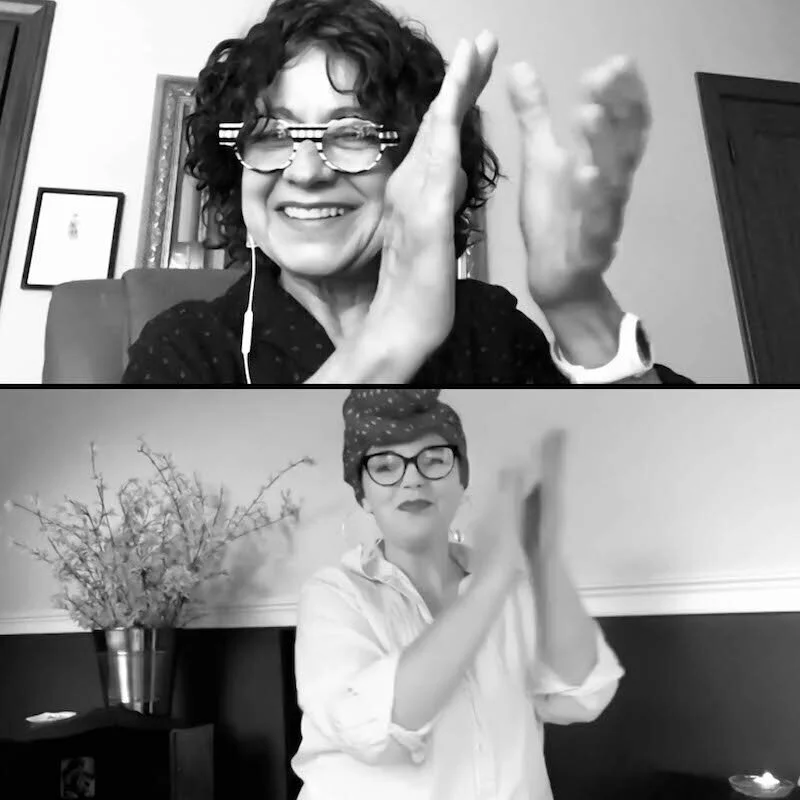
We joined over the Internet to talk about our experiences as artists in this uncertain time.

The collective tragedy of the COVID-19 pandemic has made us feel humbled and small. The waves of emotions and the immensity of the catastrophe feels too big to express. “Who am I to think that I could portray the scale of this tragedy?” 

Maureen and Kaitlin shared how debilitating their inner critics are. In this time of the pandemic, the inner critic is loud, taking advantage of our weaknesses. It’s hard to tell that inner critic to be quiet when she sounds so convincing. When we feel like we are coming apart at the seams, the inner critic is there to keep us from doing anything risky - especially art.

We are grateful to be safe, well-resourced, and with our loved ones. And we know that this is a privilege. We realize that people are suffering. Ana said, “How can I make art when others are in pain?” 

But, then Ana remembered that when words fail, that’s when we can and must use images and music to communicate.  

Kaitlin is journaling about her experience. She confessed to feeling a bit childish or self-centered about her writing. But, recently she reached a turning point and she found that she could, “turn the Particular into the General. The best storytelling and art is about personal moments.” 

Kaitlin suggested that we can honor our personal experiences. When we sit and tell our stories, they become meaningful. People need stories. And sharing our own story helps us feel less alone. It gives our lives context and beauty.  Kaitlin also recommended, “Be gentle with yourself,” she said. “It’s nice to be nice to yourself.”

And, yes, we need to be seen. That is what the Art Junket has always been to us - a supportive and positive place where we could honor our personal journeys and our art. Now, more than ever, we need a community to motivate us and bear witness to our originality. 

I spoke of the need to express our creativity as a kind of wellness practice. Brené Brown wrote: “Unused creativity is not benign. It metastasizes. It turns into grief, rage, judgement, sorrow, shame.” (Brené Brown, The Gifts of Imperfection: Let Go of Who you Think You’re Supposed to Be and Embrace Who You Are. 2010.) 

As artists in this uncertain time, there is one thing we know for sure - we need each other.  Unexpressed wounds fester and shame grows like mold in the darkness of our thoughts. We need each other. 

Thank you for being our audience, for inspiring us with your creativity, and supporting us with your feedback. We miss you. How are you doing?

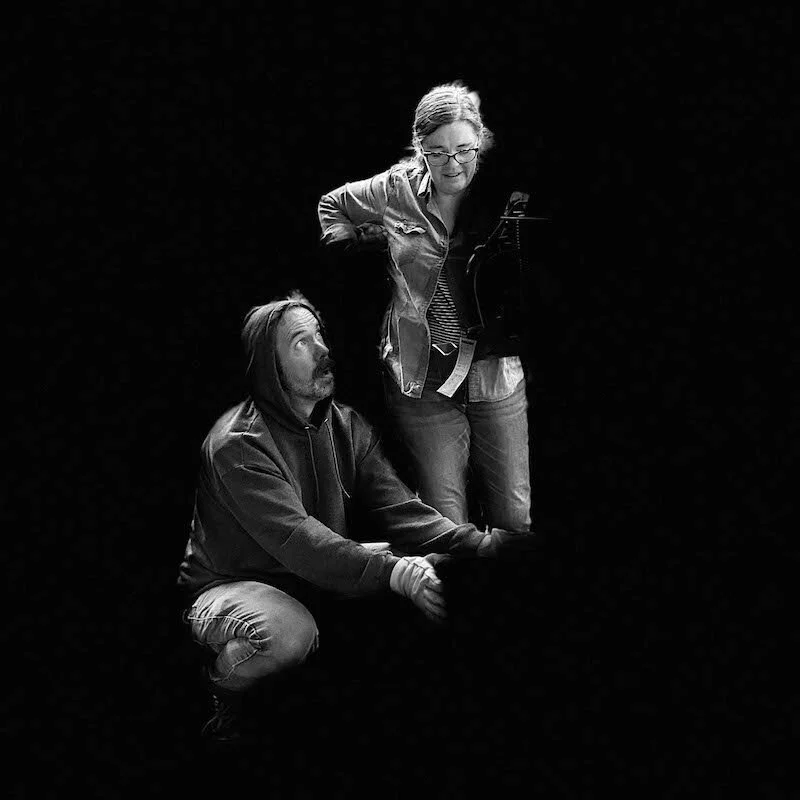
April 8, 2020. A month into the “shelter at home” orders, imposed by governments to control the spread of COVID-19, Erin Mahollitz (New York), Ana Perches (California), Kaitlin Strange (Catalonia, Spain), and Maureen Fitzmahan (New York) reached out to each other to talk about their feelings of fear, loneliness, and impotency.

Words and video by Erin Mahollitz (Pawling, New York). Erin is a founding member of the Art Junket (2015).


Kaitlin Strange: Lessons from Tuna the Cat - Surviving a Pandemic


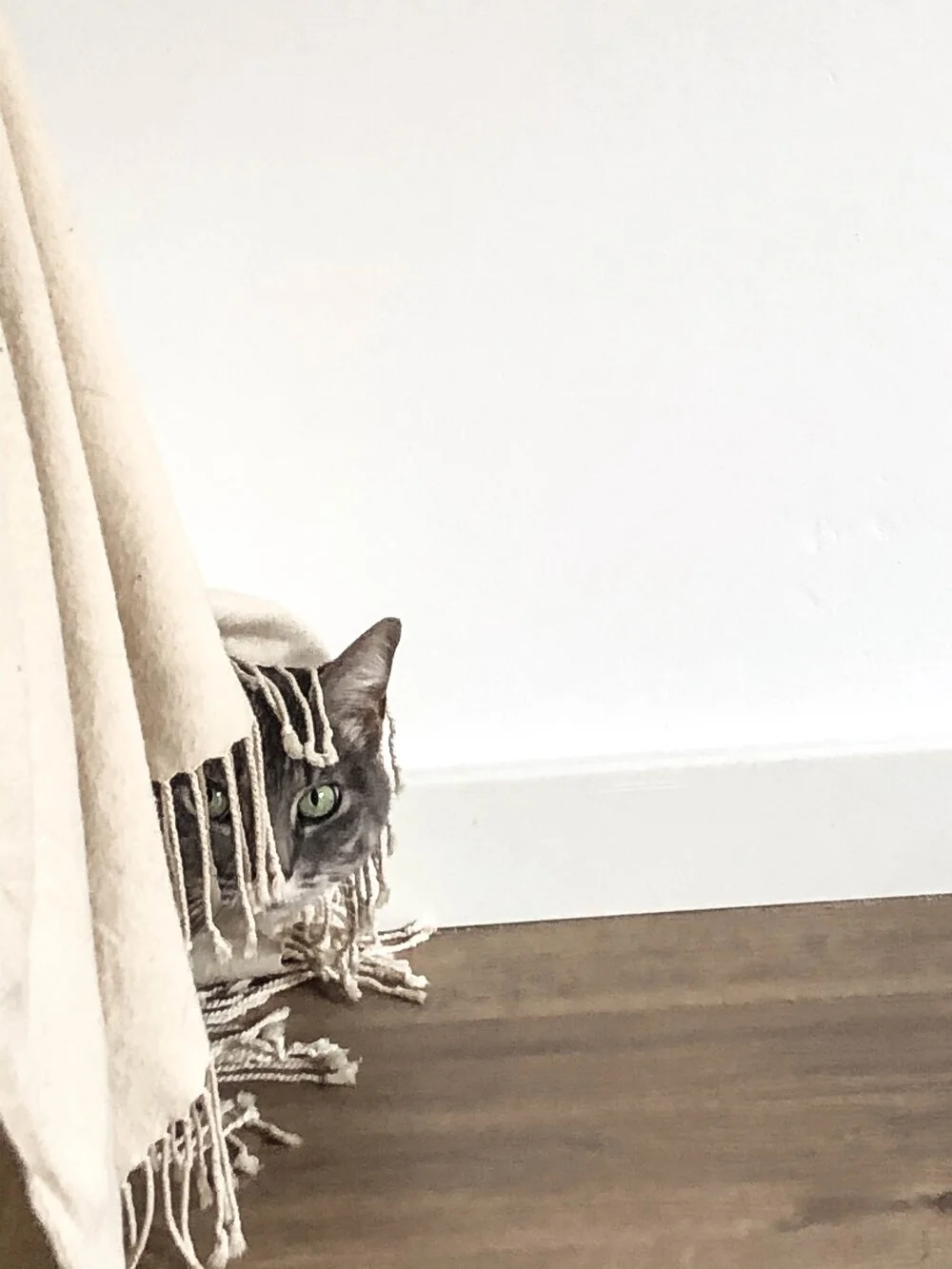
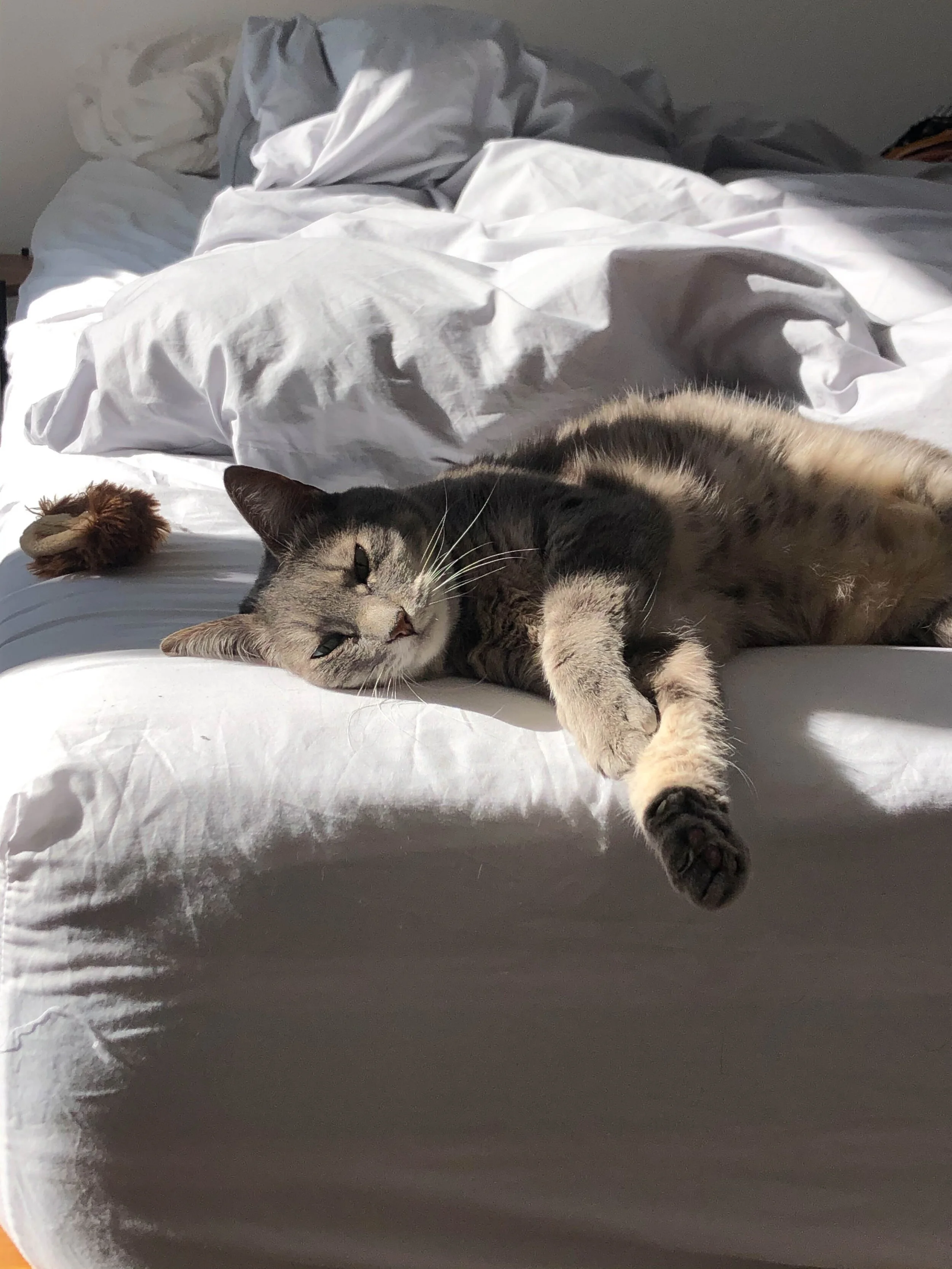
Tuna, the cat

In ancient times cats were worshipped as gods. They have not forgotten this. Terry Pratchett

Before a Cat will condescend
To treat you as a trusted friend,
Some little token of esteem
Is needed, like a dish of cream.
T.S. Eliot

Lessons from Tuna the Cat: Surviving a Pandemic  

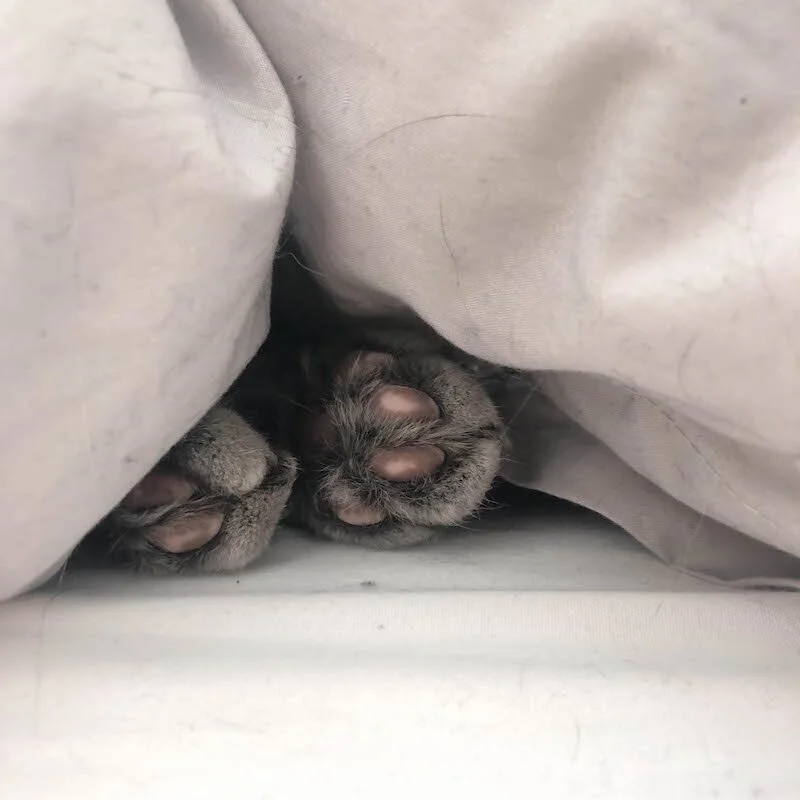
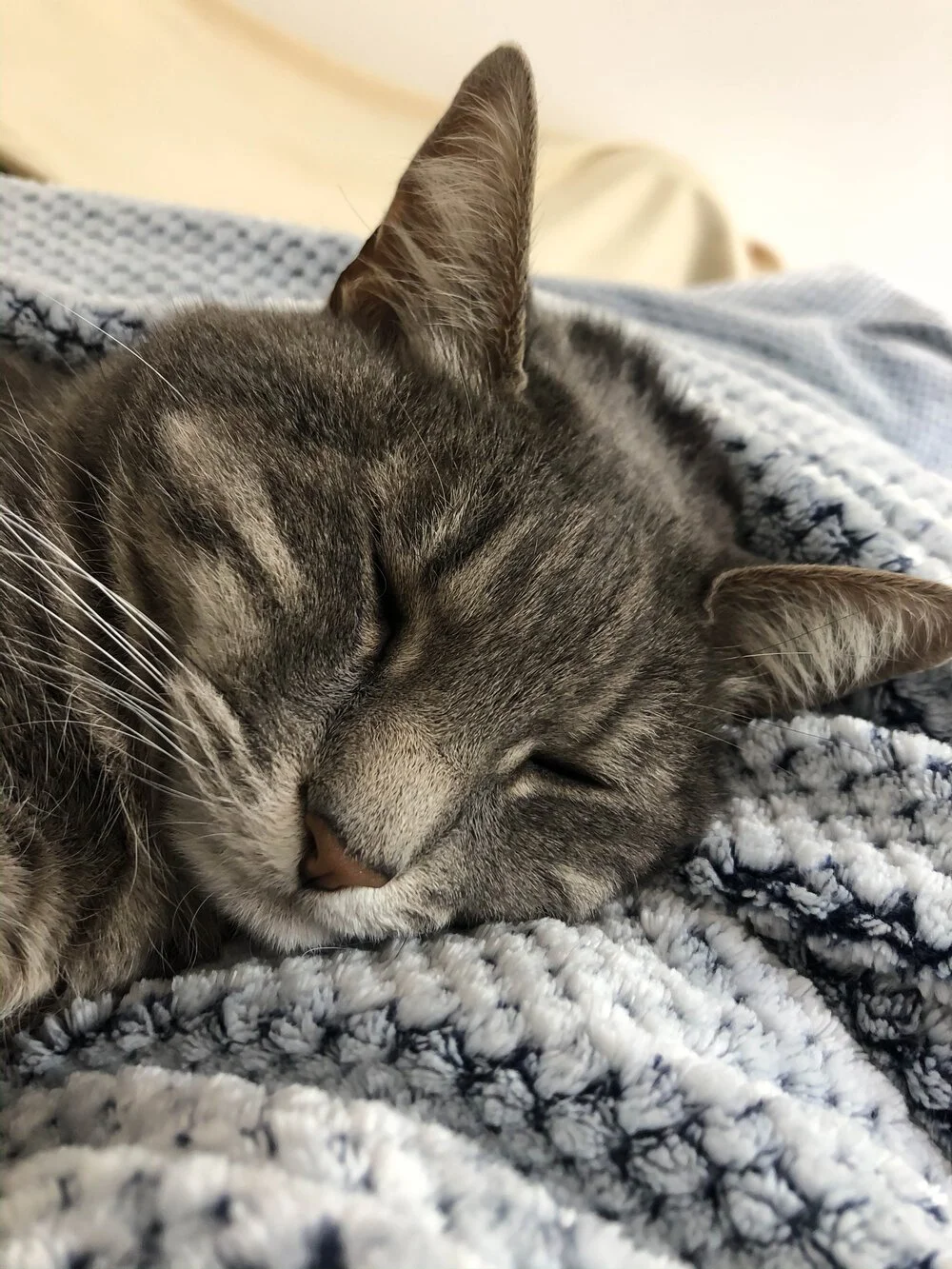
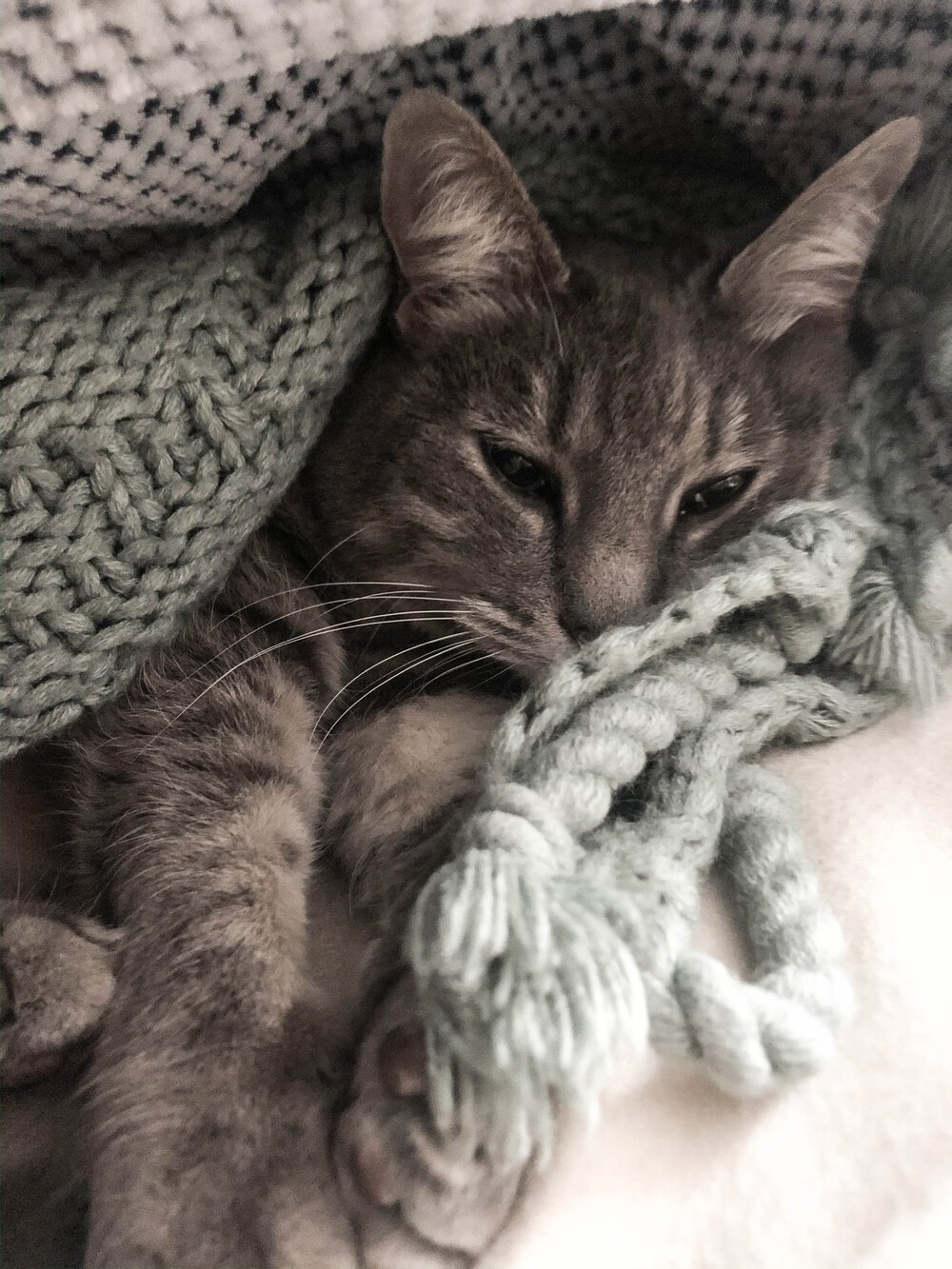
45 days of quarantine takes its toll. Boredom, anxiety, frustration, fear are inevitable. Where do we turn to find a sense of contentment or, dare I say, joy? I turn to the smaller and simpler allies around me. Yes, I’m talking about my cat. Her name is Tuna. The isolation may have influenced my choice of her as a model for self-care. But when you spend this much time with another creature you tend to pick up on their habits. And Tuna is a pro at managing stress and fighting boredom. So here you have it, five lessons on quarantine from Tuna the cat.

Prioritize Sleep

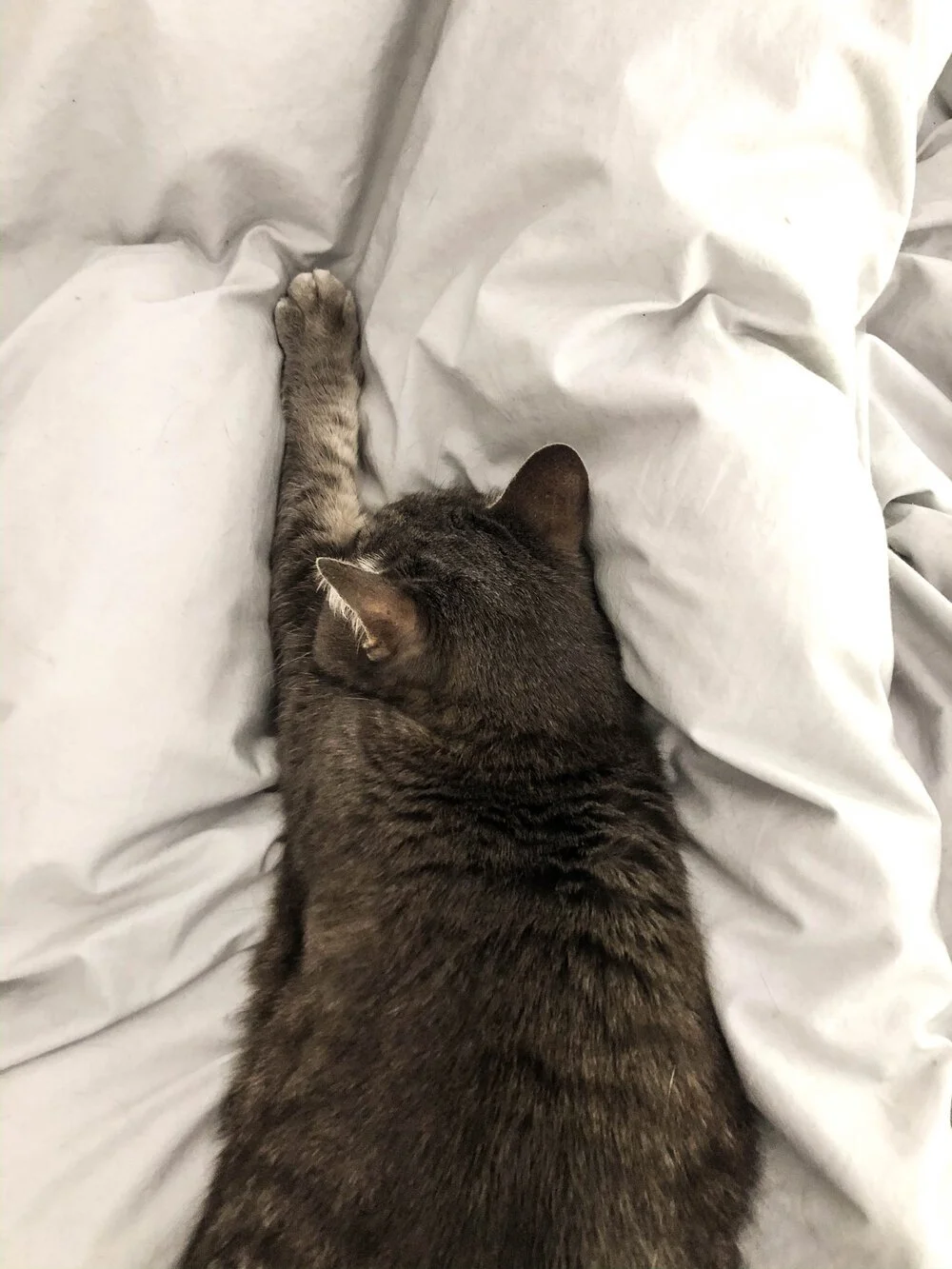
Tuna sleeps most of the day. She knows the value of a good nap. Her sleep is at times interrupted by her customary attacking, pouncing, and chasing. In the end, she knows when to take a break. And, my friends, we all need breaks. 

These are hard times. No matter what this pandemic is serving you, whether you are supporting someone who is sick or sick yourself, taking care of children, trying to work, or just getting through the day. These are trying times. Stress comes from inside our homes as well as outside. With the internet, cellphones, and social media, stress and anxiety is not hard to come by. To cope, our brains and bodies need to rest and reset. Tired in the middle of the afternoon? Great. Take a nap. Emotionally exhausted after an epic news session. Fantastic. Take a nap. Can’t find the motivation to do anything? Feel yourself slipping into a pit of sadness? No worries. Take a nap. 

Do as Tuna does, get your sleep on. Life, even during a pandemic, is a lot more manageable if you listen to your body and sleep when you need to. 

Prioritize food 

What day is it? What time is it? Where am I? These are now daily questions. For a cat like Tuna, these questions are irrelevant and futile social constructs. Food, on the other hand, is the cornerstone of a happy daily routine. She eagerly awaits the most significant events of the day: breakfast and dinner. She knows when, where, and how she will be fed. And afterwards she is carefree and moves on with her day. 

Food can be a source of comfort, health, and sanity. In these simple times, food is the foundation of routine. You need to eat, so do it up. Plan out your meals and take time to prepare Even better, FaceTime a friend while you prep and cook. Savor your food. Enjoy the flavors. And don’t forget to indulge. We can’t spend hours preparing a culinary experience everyday. Sometimes you just need to binge watch trashy TV while eating boxed mac and cheese with hot sauce. 

Express your feelings 

Tuna is not afraid to let you know how she is feeling. Usually in the form of meowing in your face or jumping on your lap. She does not shy away from telling you she needs you, when she needs you. 

It’s hard to ask for help. Vulnerability and sensitivity does not always feel safe or comfortable. But your community is here for you. Trust that if you ask, they will respond. A phone call or a quick message will do the trick. People will be eager to help and support. In fact, they will be grateful. Because your vulnerability allows them to be vulnerable. So go ahead, let people know how you are feeling and what you need. 

Enjoy the simple things

Tuna will turn anything into a toy: a bottle cap, a piece of string, a price tag, a piece of lint. She isn’t picky. She welcomes the entertainment. 

When stuck at home it can be easy to find something to do. The long list of to-do’s and half-started projects are endless. But now is also a time to slow down, get grounded, and find joy in the simple things. So do as Tuna does, spend a few hours a day doing what makes you happy and curious. Get off the computer and the phone. Play with something physical - paint, food, wood, dirt, or a ball. Tuna will spend a solid 20 minutes playing with her own tail. Your to-do list and all the ‘shoulds’ of your life will be there when you’re done. 

Seek out the sun

Tuna will find any ray of sunshine and park herself there for hours. This is usually paired with the aforementioned nap or staring out the window and plotting against the pigeons. She’ll stretch out, take up space, and take it all in. 

This lesson’s pretty simple, cost efficient, and good for your health. If the sun comes out, find a patch of sunshine and sit in it. Or walk in it. Or do a workout in it. Or nap in it. But get that Vitamin D. And it’s not just Tuna. Research has shown that an increase in Vitamin D helps boost your immune system and protect again COVID-19. So there you go. Find that sun.

WORDS and PHOTOS: Kaitlin Fitzmahan Strange
Katie Strange (Barcelona, Spain) is a founding member of the Art Junket West since 2015.

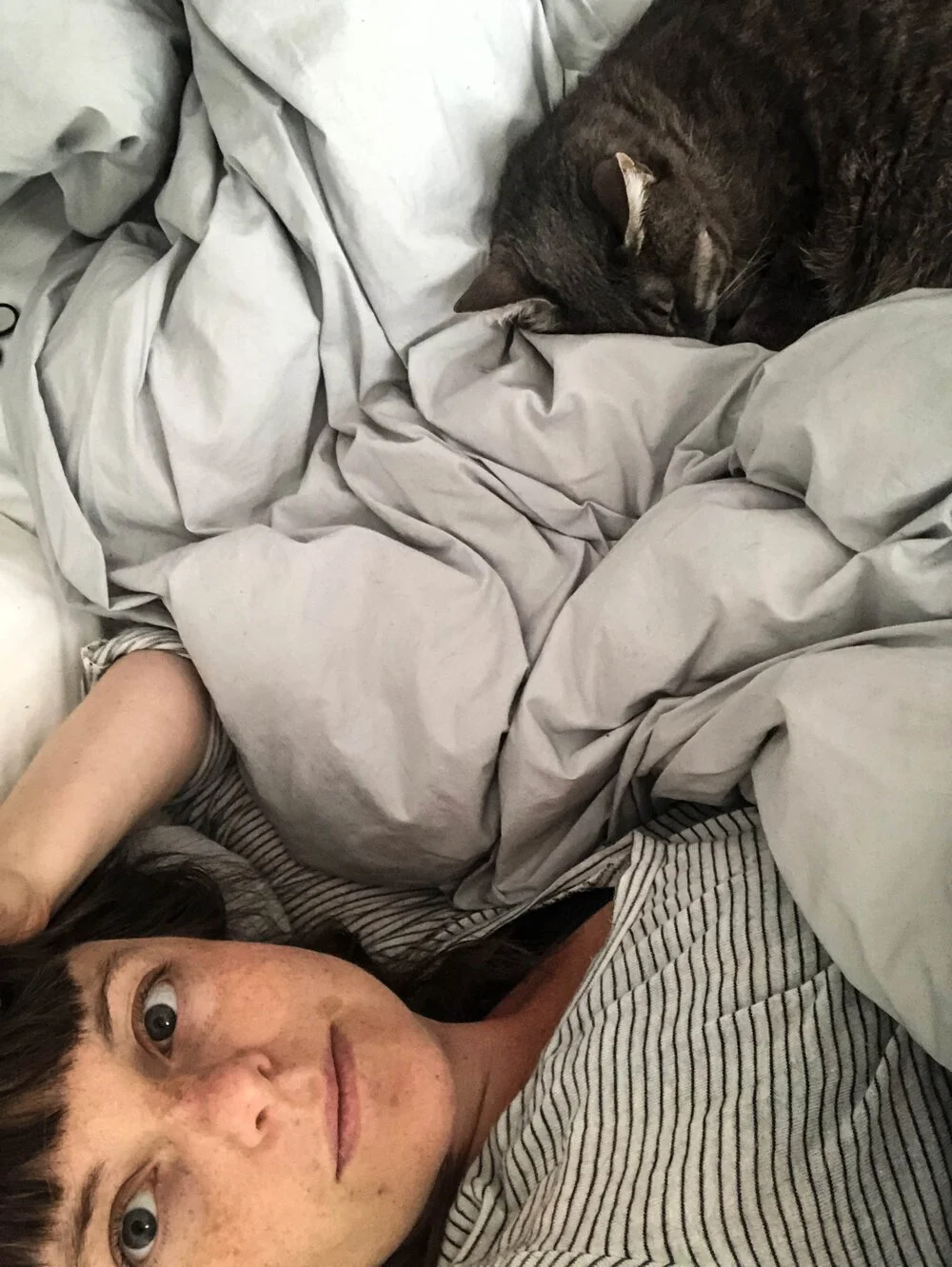
Tuna and Katie. Selfie. Barcelona, April 2020

Art in Time of Uncertainty: 2020 and COVID-19 Pandemic


2020 - Art in Time of Uncertainty

COVID-19 Pandemic

A Pandemic: An Introduction (Update April 2021)

mbfitzmahan. The Art Junket. Berkeley, California. 2020.

Don't worry about a thing
'Cause every little thing gonna be alright
Singing' don't worry about a thing
'Cause every little thing gonna be alright

Rise up this mornin'
Smiled with the risin' sun
Three little birds
Pitch by my doorstep
Singin' sweet songs
Of melodies pure and true.
Bob Marley


April 20, 2020

On New Year’s Eve, 2019, the Chinese government reported a new virus in the Hubei prefecture. 11 days later, a man died from what would be called the “coronavirus.”

That was 3 months ago. We were celebrating New Year’s Eve in Upstate New York. I thought that 2020 sounded like a particularly auspicious year.

Ten days later the virus was spotted in the United States. Two months after that, infections and deaths increased exponentially, and on March 11th the World Health Organization declared that the world was experiencing a pandemic.

There is no cure or vaccine for the coronavirus.

mbfitzmahan. Pandemic-Lockdown. 2020

In 1969 I had the Hong Kong flu in Tokyo. Thirty years later I was bedridden for six weeks in Wales with a different flu. In early March here in Upstate New York, I suggested to Don that maybe we should go to COSTCO and buy extra toilet paper. Maybe buy extra beans and hand sanitizers. Do we have enough flour?

Governments throughout the world were dangerously unprepared for the coronavirus. Recriminations were tossed back and forth between presidents and prime ministers. Someone had to be blamed. Was it the Chinese? The Democrats? Those hospital workers that must be stealing face masks. How about Bill Gates or Jeff Bezos?

Although warned weeks before the outbreak, Donald Trump failed to effectively mobilize a nationwide response to the epidemic. The virus spread so quickly, that each week of inaction led to massive infections and deaths.

The president forbid visits from travelers from China, then from Europe, and then from everyplace else. Still people got sick and died. Even if sick, people were told to stay home. Only if “you feel like you are drowning or you can’t catch your breath should you go to the doctor’s or to the emergency room.”

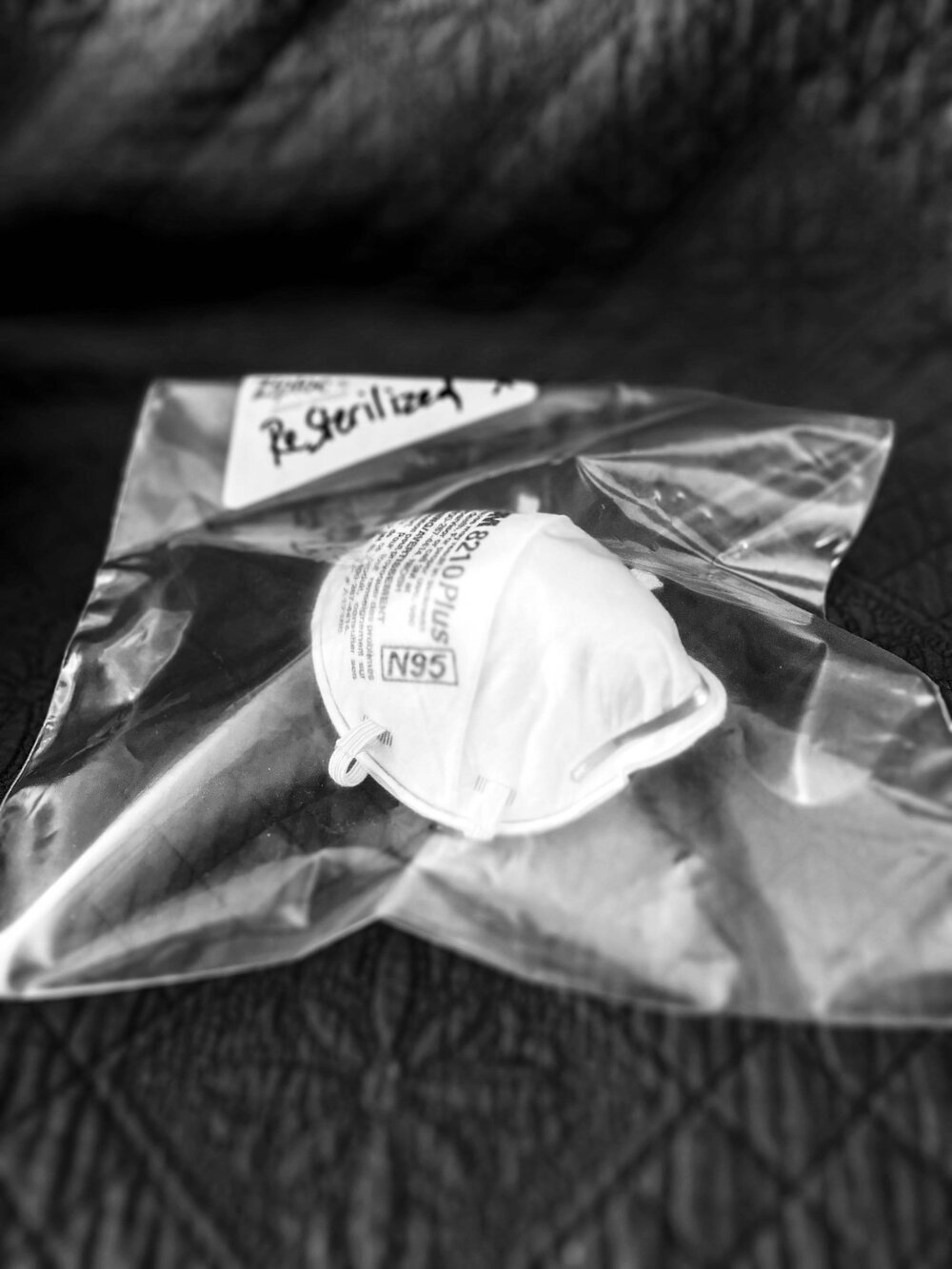
Hospitals could not take care of all the sick. ICU’s were filled past capacity. Doctors and nurses didn’t have enough protective masks and gowns. Medical staff came down with the disease. Many died.

Tao Graham. Masks. Berkeley, CA. April 2020

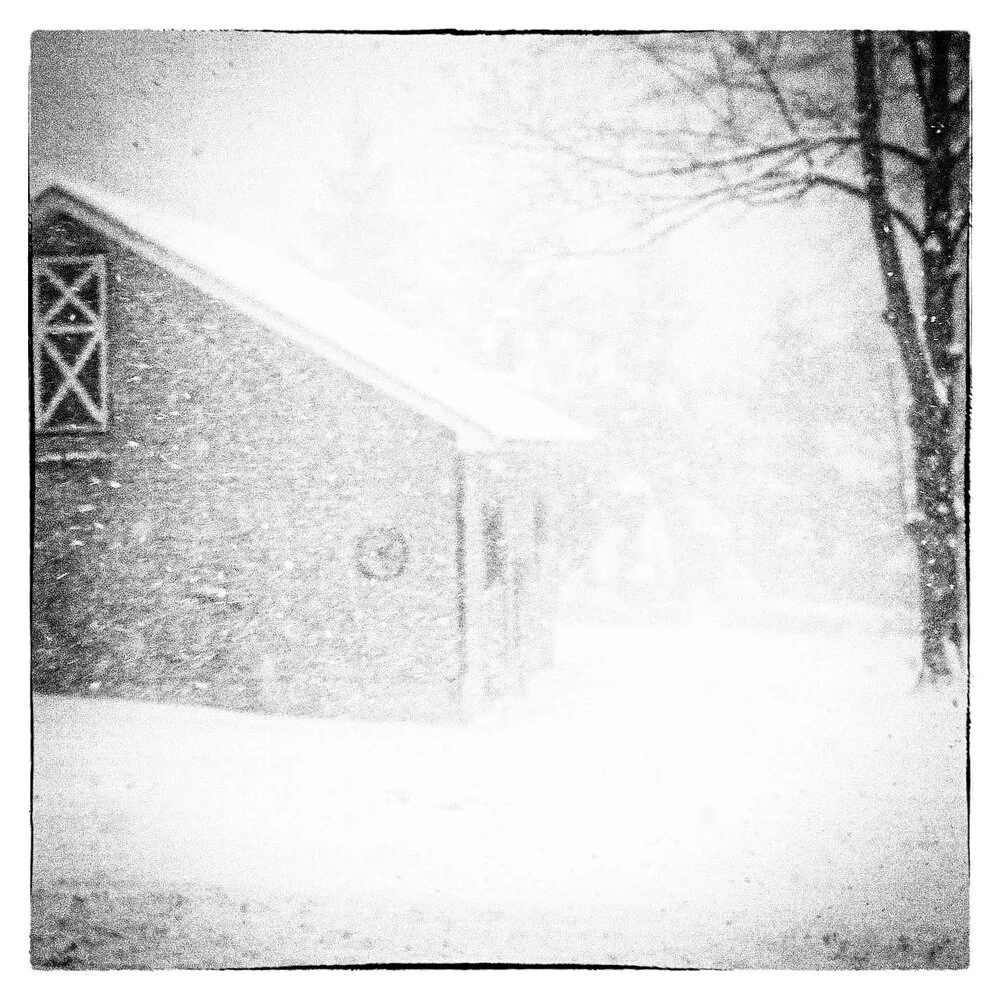
Trying to avoid going to the store, Don and Eric make bread every other day. Don makes rice milk and Eric makes oat milk. Don makes kombucha. Erin helped us plan a garden and I bought seeds for planting. Our 6 year old twins are out back making the ground ready. Just waiting for the weather to cooperate. It snowed today on April 18th.

The CDC and the World Health Organization warn people: “wash your hands and don’t touch your face.” Avoid large crowds. Finally, in mid March governors from many states ordered schools to shut down. Non-essential businesses were forced to close and finally people were ordered to stay home.

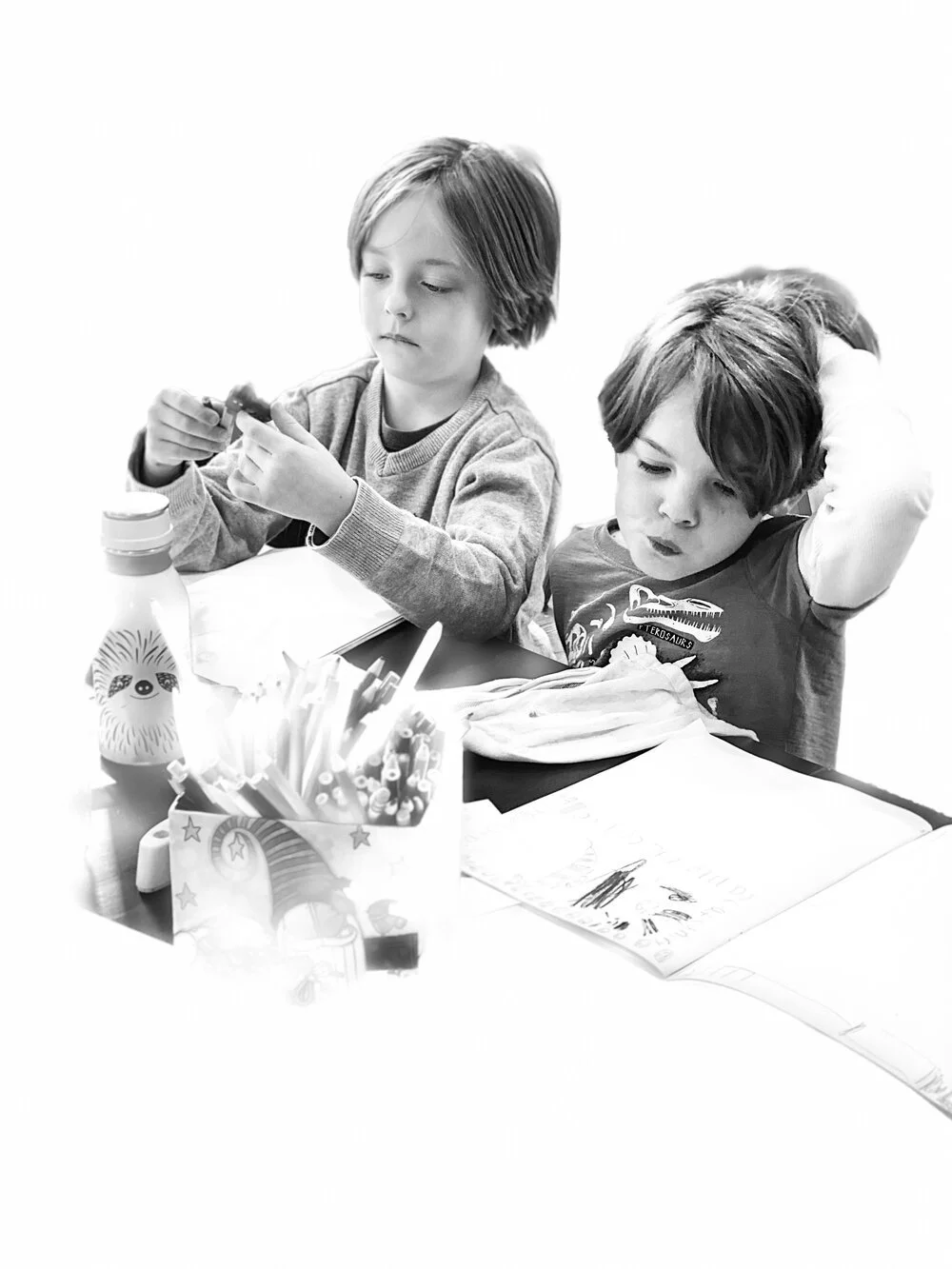
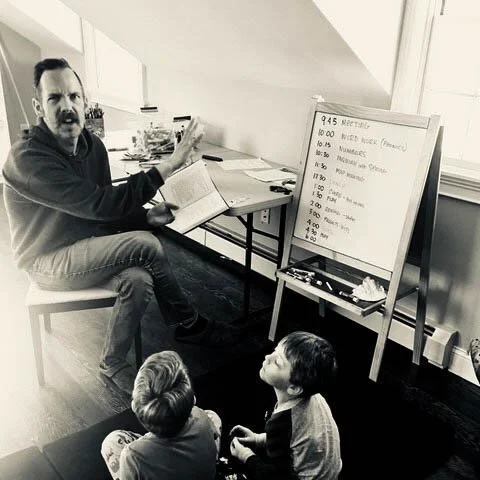
We are “sheltered in place.” Erin and Eric take turns homeschooling their Kindergarten boys. Schools have been closed since March 18th. It is likely that schools won’t reopen until September.

The disease spread from community to community, unhampered and chaotic. Without a cure, the virus killed the most vulnerable - the old, the sick, African Americans, and Latinos. It also infected the young and killed some of them, too.

Don and I are the most vulnerable in our multigenerational household as we are both in our 70’s. On March 21st, Liam suddenly came down with a stomach ache, fever, and diarrhea. Augie, Erin, and Eric soon had similar symptoms. The family stayed upstairs in self-quarantine. Don and I fixed meals, snacks, and drinks and left trays on the stair landing. The symptoms lasted only 4 or 5 days, but Erin et. al. stayed upstairs for the requisite 14 days. Stomach ailments were not initially considered one of the symptoms of coronavirus. But, to be safe, the four of them stayed upstairs. A few weeks later, fever and stomach ailments were identified by the CDC as possible symptoms of coronavirus.

Kaitlin Strange. Quarantined in Barcelona. Barcelona, Spain. April, 2020

As of this writing on April 20th, 2020, globally there have been reported 2.5 million cases of the coronavirus disease. Since few people are tested for the virus - that number is probably only a scant 10% of the true number - the actual number of cases is more likely 20.5 million. In the United States there have been 767,379 cases of coronavirus. The likely number of cases could be as high as 7.6 million.

The first case of coronavirus in New York State was discovered on March 1. Today, a bit more than a month and a half later, the number of confirmed cases is 256,555.

The first death in New York State was on March 14th. Today the death toll for New York is 19,693.

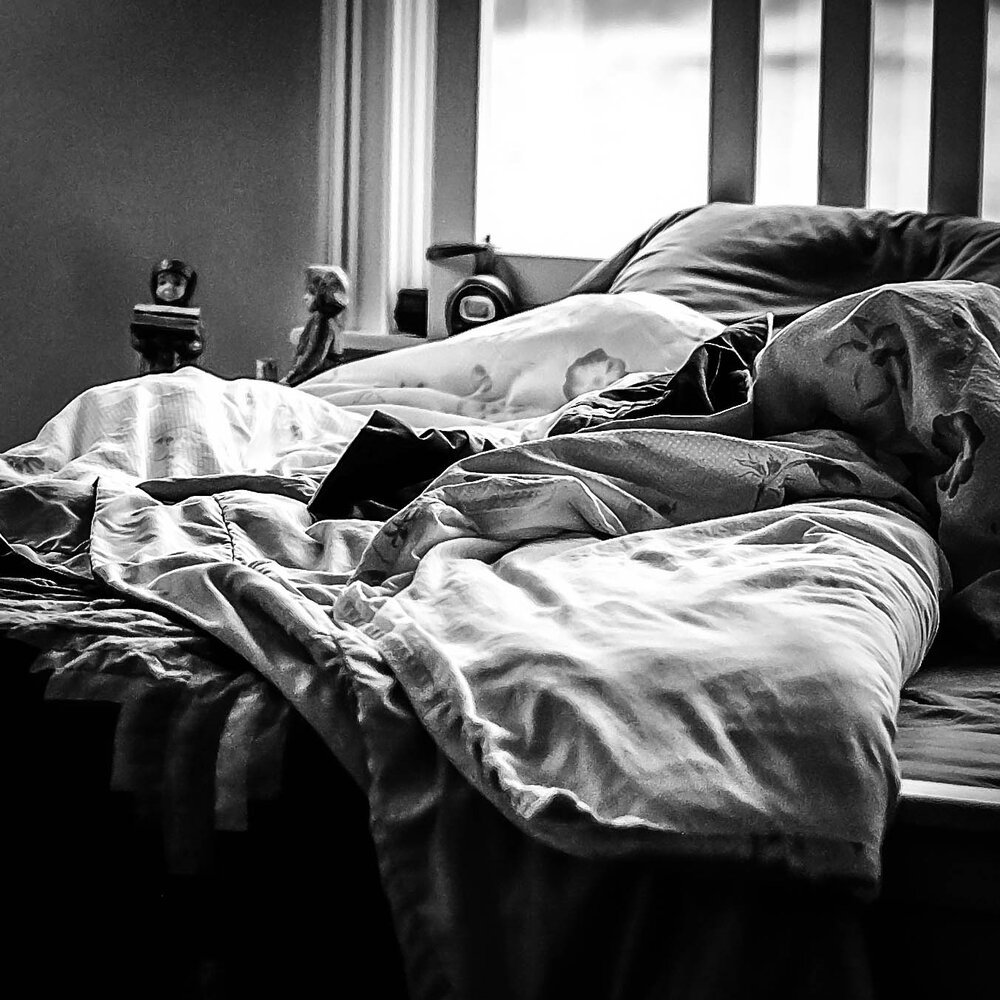
Maureen Fitzmahan. Unmade Bed. Pawling, New York. March 2020.

Don and I go for walks down our country road. I listen to podcasts on the pandemic and go on Zoom and FaceTime to talk to our family. I watch British dramas on Netflix until 2 in the morning. The last time I walked out with a group of people was in late February when Don and I took the train to Grand Central Station and toured the Catacombs under the Basilica of Saint Patrick’s Old Cathedral in Manhattan. Touring tombs below the busy streets of New York City seems an uncannily prescient experience when the first death in New York City would hit 2 weeks later.

I felt very anxious in the first weeks. Boredom broke through next. Depression followed. Now I am writing this article, and I feel like I have some small purpose as I reach out to you, my artist friends. I feel like I am a small part of a global experience, sharing these hard months with 7.6 billion other vulnerable human beings.

Maureen Fitzmahan, April 21, 2020. Pawling, New York.

Brian Nelson. Untitled. Berkeley, California. April 2020.

Update: April 25, 2021.

One year has past since I wrote this article.

Around the world we are still working our way through this COVID pandemic. Worldwide there have been 14.7 million cases of COVID 19. There have been 3.1 million deaths.

The United States has suffered nearly 600,000 deaths, and 32.1 million cases of coronavirus.

Fortunately, none of our Art Junket members got sick. We all changed our lives considerably. Katie Strange who had left Berkeley moved to Barcelona in September 2019 to get her PHd. Her husband contracted coronavirus early in March 2020 and was extremely sick. Fortunately, Katie who was a few months pregnant, stayed well. She gave birth to a baby boy in August 2020. Then four months later, she and her family left Barcelona. The members of her collegiate were not able to meet because of the pandemic and any opportunity to continue her research was stymied. She and the family have moved to Vashon Island near Seattle, Washington.

Erin Mahollitz. “This Is Not the Homeschooling You Are Looking For,” Pawling, New York. March 2020.

Erin and our families have bought 20 acres in Upstate New York and Erin is still homeschooling her twin boys. Shauna and her husband escaped Brooklyn and have spent the last year moving from safe harbor to safe harbor to avoid the virus - Wisconsin woods, Colorado winter, Yucca Valley in California, and Seattle, Washington.

The former president, Donald Trump, denying the danger of the pandemic, made the health crisis a political platform. Fortunately, he was thrown out of office in the November elections and Joe Biden was elected president.

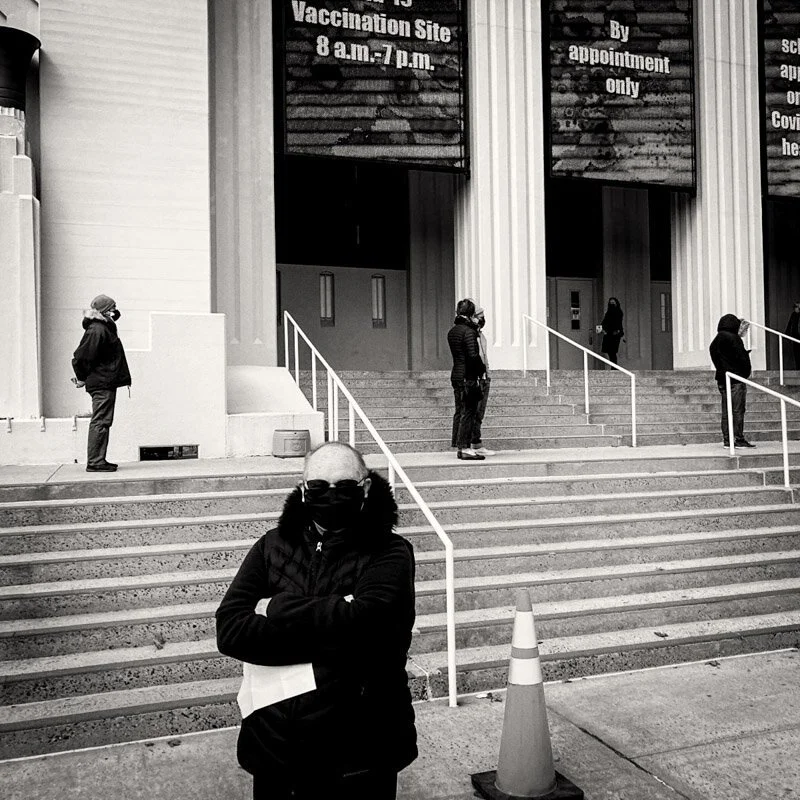
Vaccines became available, and many of us have been vaccinated in 2021. The State governments started inoculating health care workers and then those of us over 65. Quickly, everyone became eligible. As of April 2021, every adult in the United States is eligible to get a vaccine.

Don Fitzmahan. Maureen vaccinated! Westchester County, New York. February 11, 2021.

At first, it was very difficult to find an appointment to get vaccinated. Don and I were fortunate to be able to have the time and resources to get vaccinated with our first dose of the Pfizer vaccine at the end of February. We got our second on March 4th.

The country has not reached ‘herd immunity,’ yet. Nearly 30% of Americans have received at least their first dose of the vaccine. 229 million doses have been administered. Worldwide 1 billion people have been vaccinated at least once. Most vaccines require two shots to be completely effective.

25% of American adults are still refusing to get vaccinated because they distrust the government, fear the effects of the shot, or doubt the efficacy of the vaccines.

Since last year, the United States has suffered nearly 600,000 deaths from COVID 19.

In other parts of the world, the disease has surged. In India nearly 300,000 people contracted the virus yesterday. Japan continues to ban travel into their country. New variants of the virus are dangerously attacking unvaccinated populations.

There are signs in the news and from friends of high levels of optimism interspersed with deep levels of fear, depression, and ‘languishing.’

Maureen Fitzmahan, April 26, 2021. Lagrangeville, New York.

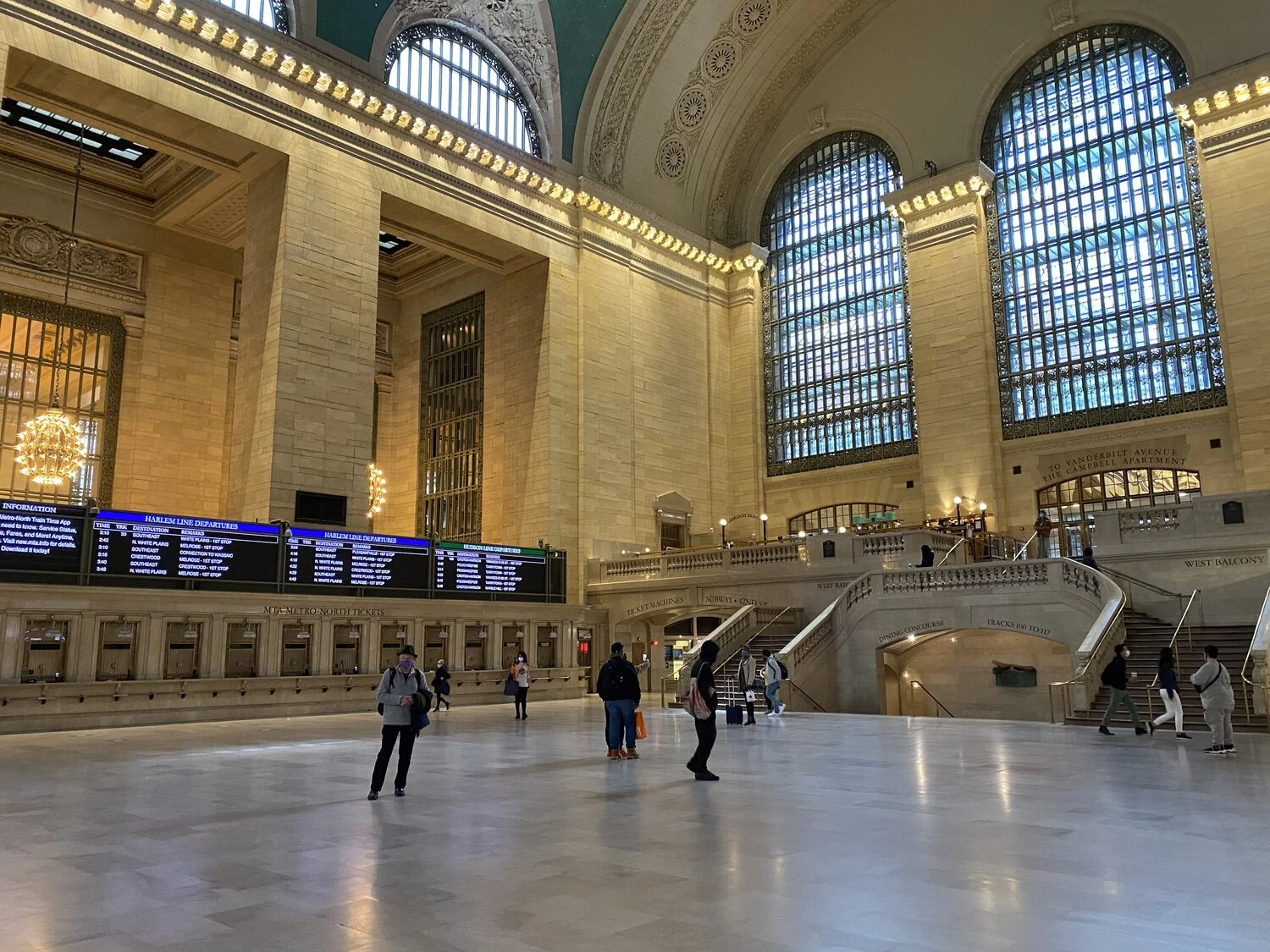
mbfitzmahan. Grand Central Station at Noon. New York City, NY. May 10, 2021.

Update: May 15, 2021

An unexpected turn of events brings us hope. On Thursday, May 13th, the American CDC (Centers for Disease Control and Prevention) announced that studies now show that in the United States vaccinated persons are unlikely to be contagious. In addition, the vaccines have been found to be 97% effective, even against the highly contagious and virulent variants from the UK, South Africa, Brazil, and India.

Because of the latest science, the CDC no longer requires vaccinated persons to wear masks in most places. Inside or out.

Fully vaccinated people (i.e. 2 weeks beyond 2nd vaccination) no longer need to wear a mask or physically distance in any setting, except where required. Also, vaccinated people do not need to be tested following a known exposure to the virus.

Katie Fitzmahan. Katie and Huxley Strange back in the United States. Seattle, Washington. February 14, 2021.

This is surprising and very good news.

Maureen Fitzmahan, May 15, 2021. Lagrangeville, New York.

The photographs on this page are by Art Junket members - West, East, and Abroad. In April 2020. I made a call to artists, most of us in isolation at home, to push through our fear, feelings of impotence and ennui. Go and take a photo. Use your iPhone or any camera available. How are you feeling, what are you seeing? Record this historic time through art.

Tao Graham - Berkeley, California - member of Art Junket West (2017-2022).

Kaitlin Strange - Barcelona, Spain - founding member of the Art Junket (2015-2022).

Maureen Fitzmahan - Pawling, New York - founding member of the Art Junket (2015-2022).

Brian Nelson - El Cerrito, California - member of Art Junket West (2017-2022).

Erin Mahollitz - Pawling, New York - founding member of the Art Junket (2015-2022).

Words: Maureen Fitzmahan

Tech adviser and designer: Erin Mahollitz

Photos on cover, and front - Maureen Fitzmahan.

Maureen Fitzmahan and Erin Mahollitz are the founding members of the Art Junket (2015-2020).